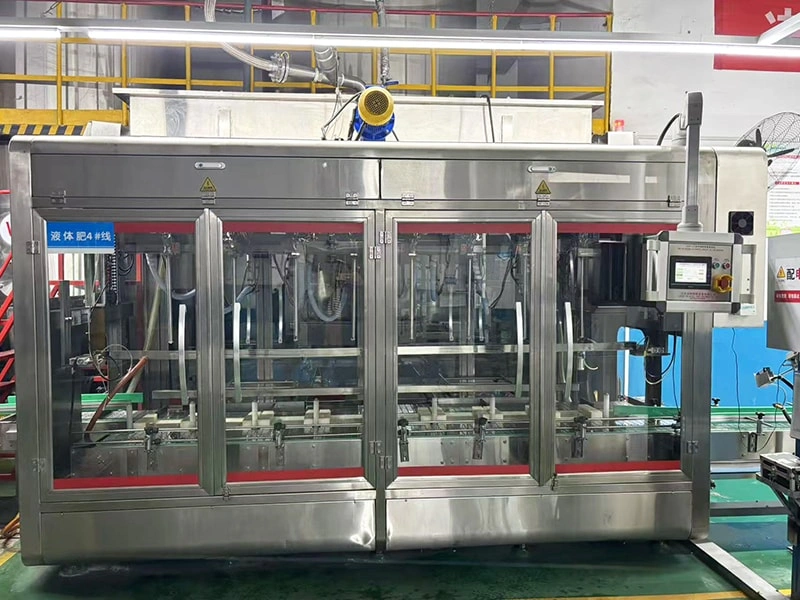
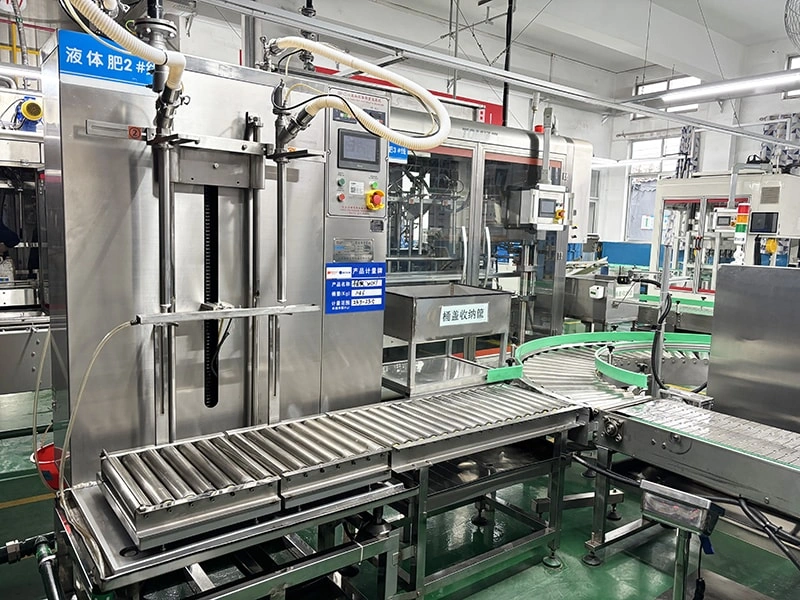
Biological enzymatic hydrolysis technology uses specialized biological enzymes as efficient catalysts. Under mild reaction conditions, it targets and breaks down various macromolecular substances into small-molecule active components. The core advantage of this technology is its ability to significantly reduce the activation energy of chemical reactions, fundamentally achieving energy savings and consumption reduction in production while ensuring the entire production process is safe, controllable, and environmentally friendly.
HSE
01
Water Stress
Drought Stress
Drought is the primary natural disaster affecting crop yield and quality. Among the total area affected by agricultural disasters in China, drought-affected areas account for 42% year-round, resulting in an annual grain reduction of approximately 12.5 billion kg (approx. USD 1.75 billion). Drought conditions interfere with basic physiological metabolisms such as photosynthesis and respiration, hinder root absorption of soil nutrients, and reduce the synthesis of active substances in fruits, including mineral elements, amino acids, soluble proteins, soluble sugars, flavonoids, and vitamin C. Ultimately, this leads to reduced crop yield and declining fruit quality.
Waterlogging Stress
The damage caused by waterlogging to crops does not originate from standing water itself. Long-term soil water saturation results in insufficient oxygen supply to the root system, thereby inducing damage to various physiological functions. In the early stage of waterlogging, plant leaves wilt and droop, with slight curling. As waterlogging persists, symptoms such as leaf yellowing and abscission, flower and fruit drop, and drying of new shoots occur. If the waterlogging period is prolonged, branches dry out and necrose, xylem discolors, bark peels off, and in severe cases, the entire plant dies.

02
Light Stress
Light conditions directly affect crop yield and quality. Both excess and insufficient light reduce photosynthetic efficiency and inhibit photosynthetic nutrient synthesis. Due to global climate change, solar radiation intensity has been declining year by year in many regions. Relevant experimental data show that for every 1 MJ/m² decrease in daily average solar radiation, corn yield decreases by 6%–7%, and wheat yield decreases by up to 6%–8%.
Strong sunlight can easily cause fruit sunburn, leading to skin burning, ulceration, shrinkage, hardening, and sugar loss. When light is insufficient, the synthesis of soluble solids, soluble sugars, soluble proteins, vitamin C, and other substances in fruits is hindered, significantly deteriorating fruit quality.

03
Temperature Stress
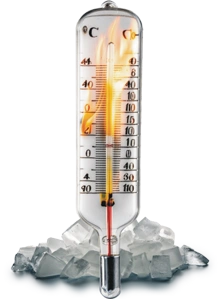
In recent years, extreme weather events have become frequent, making temperature-related stresses such as high and low temperatures increasingly prominent, seriously threatening the normal harvest of various food crops.
High Temperature Stress
For every 1°C increase in temperature, the global average yield of major grain crops can decrease by up to 19.7%. Relevant predictions indicate that around 2040, high-temperature disasters may cause a 30%–40% reduction in global grain production. Research data from Science Advances show that between 1992 and 2013, extreme high temperatures driven by climate change caused global economic losses exceeding USD 16 trillion.
Low Temperature Stress
After crops suffer chilling injury, photosynthetic efficiency decreases, cell membrane fluidity worsens, and root absorption and nutrient transport capacity decline. Photosynthetic products and mineral nutrients cannot be smoothly transported to various growth parts of the plant. Compared to chilling injury, freezing injury is more destructive. In addition to the above physiological problems, it causes intracellular and intercellular freezing, destroys plant tissue structure, leads to leaf dehydration and yellowing, and in severe cases, the entire plant dies. In 2023, China experienced 31 rounds of cold air invasions, including 8 cold wave events. Low-temperature freezing injury and snow disasters affected a total of 519,200 hectares of crops, causing a direct economic loss of USD 686 million.
04
Soil Stress
Soil environmental stress is a prominent issue in China, causing annual grain reduction of up to 10 billion kg (approx. USD 1.4 billion).
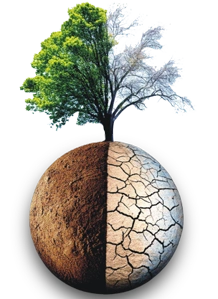
Soil degradation is the most critical problem among soil stresses. Deterioration of soil structure and imbalance of beneficial microorganisms lead to a series of degradation symptoms such as soil infertility, acidification, and salinization. Relevant calculations show that without targeted improvement measures, soil acidification could cause a grain yield reduction of more than 16% in the future. Currently, the global area of salinized land exceeds 833 million hectares, with more than 10% of arable land experiencing salinization, continuously threatening global food supply. In addition, soil degradation reduces the quality of agricultural products, leading to insufficient synthesis of starch, protein, amino acids, and other nutrients in fruits, hindering fruit coloring and aroma formation, and ultimately causing a significant decline in fruit appearance, taste, and nutritional value.
05
Air Stress
With rapid industrialization and urbanization, air pollution has become increasingly severe and is now a key stress factor hindering normal crop growth. Harmful pollutants such as sulfides, hydrogen fluoride, nitrogen oxides, and heavy metals in near-surface air interfere with crop photosynthesis, respiration, and various physiological metabolisms, damage plant cell tissues, cause growth retardation, and in severe cases, plant death. Therefore, enhancing crop tolerance to polluted air has become a key direction in plant stress resistance research.
Changes in carbon dioxide (CO₂) content also profoundly affect crop yield and quality. Statistical data from China between 2003 and 2020 show that CO₂ emissions increased from 4,249.68 million tons to 10,503.75 million tons. If greenhouse gas emissions are not controlled, it is estimated that by the end of this century, one-third of the world's arable land will face the risk of total crop failure. Continuously rising CO₂ concentrations also restrict the accumulation of mineral elements and proteins in crops, leading to a decline in the nutritional quality of agricultural products./p>

-

Improving Fertilizer
Use Efficiency -

Focusing on Soil Health
-

HSE Management System
Based on the development direction of reducing fertilizer use while increasing efficiency, we rely on innovative agronomic solutions to help achieve the dual reduction of agricultural fertilizers and pesticides, safeguarding the safety of agricultural products at the source.
We are well aware that long-term excessive application of traditional fertilizers not only causes unnecessary waste of agricultural resources but also continuously damages the soil, water, and atmospheric ecological environment. To this end, the company has incorporated fertilizer reduction and efficiency enhancement into its core HSE development strategy. Reduction does not mean blindly cutting fertilizer use, but rather relying on self-developed biostimulant products and supporting agronomic solutions to comprehensively improve the absorption and utilization efficiency of fertilizer nutrients.
Several of our biostimulant products incorporate high-activity humic acid, seaweed extracts, amino acids, and other core ingredients, enabling multi-mechanism support for scientific reduction: activating solidified and idle nutrients in the soil, converting them into forms easily absorbed by crops; promoting robust root growth and expanding the root absorption range; regulating plant physiological functions to accelerate nutrient absorption and transformation. On the basis of stable yield and quality, farmers can reduce fertilizer use by 10%–30%.
Fertilizer reduction not only lowers dependence on agricultural chemical inputs but also reduces agricultural non-point source pollution such as water eutrophication caused by nutrient loss, while simultaneously reducing greenhouse gas emissions. We adhere to a green R&D approach, using environmentally friendly agricultural solutions to help domestic agriculture achieve the task of reducing fertilizers and pesticides, continuously delivering safe and high-quality agricultural products, and earnestly fulfilling our social responsibility for food safety and ecological environment protection.
Focusing on Soil Health, Resisting Salinity and Alkalinity
Soil is a precious, non-renewable natural resource. The health of the soil directly determines whether modern agriculture can achieve long-term sustainable development. Guided by the HSE business philosophy, we are deeply engaged in soil ecological maintenance and degraded farmland restoration, focusing on overcoming soil problems such as salinization, which has become a major abiotic stress factor hindering global agricultural stability.
Soil improvement runs through our entire product development and formulation design process. Our self-developed biostimulants utilize unique active functional groups to optimize soil physical and chemical properties, promote soil aggregate formation, break soil compaction, and effectively enhance soil aeration, water retention, and fertility. Under saline-alkaline conditions, the products regulate ion homeostasis within crops, block the accumulation of harmful elements such as sodium ions, enhance cellular osmotic regulation, and ensure stable crop growth under salt stress. At the same time, the organic matter in the products provides a carbon source for beneficial soil microorganisms, activates microbial vitality, and progressively restores the soil micro-ecological environment.
We do not only focus on emergency improvement of damaged soil but also place greater emphasis on long-term farmland conservation, fundamentally reversing soil degradation and optimizing farmland productivity. Through concrete actions, we protect high-quality arable land resources and leave fertile fields for future generations. This is our solemn commitment based on HSE principles and land protection.
Benchmarking International Leaders: Building a World-Class HSE Management System
A high level of Health, Safety, and Environment (HSE) management is the core foundation for the steady and sustainable development of modern chemical enterprises. Based on this concept, the company's HSE management system benchmarks the standards of leading international multinational corporations and is established in accordance with the international advanced standards of ISO 14001 (Environmental Management) and ISO 45001 (Occupational Health and Safety).
Standardized control is implemented at all stages of the entire industrial chain: In production, green and environmentally friendly processes such as biological enzymatic hydrolysis are selected, energy consumption is strictly controlled, and specialized deep treatment of exhaust gas, wastewater, and solid waste is carried out, with emission indicators better than national and local statutory limits. In terms of personnel protection, a comprehensive hazard identification and risk assessment mechanism is established. Regular HSE-specific training is provided for all positions in R&D, production, and marketing. Internationally specified safety protective equipment is provided. A safety-first corporate culture is deeply cultivated, aiming for zero accidents. During the full product lifecycle management stage, from raw material selection, formulation R&D, to packaging, storage, and transportation, safety and environmental risk assessments are conducted throughout to ensure the safety and environmental friendliness of products across the entire industrial chain.
Through the systematic, standardized, and transparent construction of the HSE management system, the company steadily advances towards becoming a compliant, responsible, and globally recognized industry benchmark enterprise.
Adopting Biological Enzymatic Hydrolysis Technology for Energy Saving and Consumption Reduction, with Safe, Low-Carbon, and Green Production Processes.
-
01
Energy Saving Advantages
Energy Saving Advantages
Mild Conditions and Efficient Catalysis
Compared to traditional processing technologies, the energy-saving advantages of biological enzymatic hydrolysis are very prominent, mainly reflected in two dimensions: mild reaction environment and efficient catalytic performance.
-
1. Mild Reaction Conditions, Significantly Reducing Energy Consumption: Traditional processes often rely on high-temperature cooking, high-pressure environments, and harsh conditions such as strong acids and alkalis to break down raw material structures, resulting in consistently high energy consumption throughout the process. In contrast, biological enzymatic hydrolysis processes can carry out reactions stably under normal temperature and pressure, and suitable pH environments, without needing continuous energy input to maintain harsh production conditions, thereby reducing heat and electricity consumption at the source and achieving efficient and energy-saving production.
-
2. Efficient Catalytic Performance, Saving Production Energy: Biological enzymes possess strong specific catalytic activity, quickly breaking down substrate raw materials and significantly reducing the overall process time. This effectively shortens the continuous operation period of production equipment, reduces equipment energy consumption, and achieves indirect energy savings and cost reduction through efficient processes.
-
-
02
Safety Advantages
Safety Advantages
Comprehensive Risk Reduction
Biological enzymatic hydrolysis technology comprehensively mitigates production risks from three dimensions: personnel operation, equipment operation, and finished product quality, significantly enhancing the safety factor of both the production process and end products.
-
1. Optimized Working Environment, Ensuring Personnel Safety: Traditional production processes rely on high-temperature, high-pressure conditions and highly corrosive chemical reagents, which can easily cause various occupational safety hazards such as burns, scalds, and poisoning. Biological enzymatic hydrolysis technology uses mild reaction conditions throughout, completely eliminating hazardous working conditions and corrosive raw materials, thereby eradicating various operational risks at the source and comprehensively protecting the personal safety of operators.
-
2. Reduced Equipment Wear, Lowering Operation and Maintenance Risks: The mild and controllable reaction environment eliminates the need for equipment to withstand extreme high temperatures, high pressures, and strong acid/alkali corrosion, significantly reducing material requirements for production equipment. It effectively reduces corrosion and wear on equipment such as reactors and pipelines, extends equipment service life, and eliminates hazards such as material leakage and safety accidents caused by equipment corrosion damage.
-
3. Elimination of Byproduct Generation, Ensuring Product Safety: Biological enzymes have strong catalytic specificity, acting only on specific chemical bonds of target substances. The reaction process is stable and controllable, without producing harmful byproducts. This effectively ensures the purity and quality of the final product, avoids product safety hazards, and produces safe, pure, high-quality finished products.
-
-
03
Environmental Advantages
Environmental Advantages
Full-Chain Green Manufacturing
Biological enzymatic hydrolysis technology enables green production throughout the entire process from raw materials to finished products, with environmental benefits permeating the entire manufacturing chain:
-
1. Source Pollution Control, Eliminating High-Pollution Discharges: The technology uses no chemical agents such as strong acids or alkalis throughout the process, effectively preventing the generation of high-salt, difficult-to-degrade wastewater at the production source, truly achieving clean production.
-
2. Easy End-of-Pipe Treatment, Reducing Treatment Costs: The wastewater generated by the enzymatic hydrolysis process mainly consists of biodegradable organic matter, which can be treated to meet standards using conventional biochemical treatment processes, significantly reducing wastewater treatment difficulty and operating costs.
-
3. Low Carbon and Energy Saving, Supporting Dual Carbon Goals: Relying on low-energy reaction conditions, it significantly reduces electricity and heat consumption during production, indirectly lowers greenhouse gas emissions, providing strong support for carbon reduction.
-
4. Green and Renewable, Promoting Circular Economy: Biological enzymes are prepared using renewable resources through microbial fermentation, fully embodying the concept of resource recycling and building a sustainable green production model.
-
Biological enzymatic hydrolysis technology fundamentally drives innovation in industrial production models, upgrading the traditional, high-energy, high-pollution "aggressive breakdown" approach into a precise, mild, and efficient green intelligent manufacturing model. This technology is not only a core supporting technology for current industrial transformation and upgrading and for achieving national "Dual Carbon" goals but also an important foundation for building a future sustainable bioeconomy.
Scientific and Comprehensive HSE Performance Management System
The company has established a systematic and standardized HSE performance management system. Through three core components—Key Performance Indicator (KPI) setting, regular evaluation and feedback, and digital tool empowerment—it achieves closed-loop control and continuous optimization and upgrading of HSE management objectives.
-
Key Performance Indicator (KPI) Setting
HSE KPIs are closely centered around the three core objectives of health, safety, and environment, balancing comprehensiveness and practicality to achieve precise decomposition of management responsibilities and measurable implementation.
• Health Dimension: Focuses on employee occupational health protection. Core indicators include Occupational Disease Incidence Rate (Target: 0), Occupational Health Examination Coverage Rate (Target: 100%), and Health and Safety Training Pass Rate (Target: ≥95%), comprehensively safeguarding employee health rights.
• Safety Dimension: Based on risk prevention and zero tolerance for accidents, sets Number of Production Safety Accidents (Target: 0), Rectification Completion Rate for Major Safety Hazards (Target: 100%), Safety Equipment and Facility Integrity Rate (Target: ≥98%), and Emergency Drill Compliance Rate (Target: ≥95%), building a full-chain safety protection system encompassing prevention, rectification, and emergency response.
• Environment Dimension: Closely aligned with pollution prevention and green development requirements, specifies indicators such as Pollutant Discharge Compliance Rate (Target: 100%), Waste Compliance Disposal Rate (Target: 100%), and Annual Energy Saving and Consumption Reduction Completion Rate, promoting coordinated development of production operations and ecological protection.
• Setting Principles: Strictly follows the SMART principles (Specific, Measurable, Achievable, Relevant, Time-bound). KPIs are customized based on the company's industry characteristics, production scale, and risk level to ensure indicators are both challenging and feasible.
-
Regular Evaluation and Feedback Mechanism
Establishes a full-cycle, multi-level HSE performance evaluation and feedback mechanism, transforming management data into the core driving force for continuous improvement.
• Hierarchical Evaluation Cycles: Implements a four-level management model of daily inspection, monthly assessment, quarterly review, and annual evaluation. Daily inspections are performed by on-site personnel to record real-time indicator status; monthly assessments aggregate data into performance reports; quarterly reviews deeply analyze root causes of indicator deviations; annual evaluations comprehensively assess performance results for the year.
• Comprehensive Evaluation Methods: Uses a combination of quantitative statistics and qualitative evaluation. Quantitative data is automatically collected through production and monitoring systems to ensure objectivity and authenticity; qualitative evaluations are conducted by professional assessment teams, combining on-site safety behavior, emergency response capabilities, etc., to comprehensively reflect management effectiveness.
• Closed-Loop Feedback and Improvement: Establishes two-way communication feedback channels. Through performance notifications, departmental meetings, etc., results are promptly fed back to responsible departments with clear improvement directions. Simultaneously, employee suggestion channels are opened to widely collect optimization proposals. For identified issues, the closed-loop process of problem listing, assignment of responsibility to individuals, implementation of rectification, and tracking acceptance is strictly enforced to ensure all problems are thoroughly resolved with no remaining issues.
-
Digital Tool Empowerment for Closed-Loop Management
Leverages digital technology to comprehensively improve the efficiency and accuracy of HSE performance management, achieving full-process visualization and intelligent control.
• Digital Closed-Loop Implementation: Builds an integrated HSE intelligent management platform that integrates core functions such as data collection, intelligent analysis, and rectification tracking, incorporating the entire process of indicator setting, execution, monitoring, and improvement into system control. The platform can automatically warn of safety hazards overdue for rectification, sending reminders to responsible personnel and management. After rectification is completed, supporting evidence is uploaded for review and archiving, achieving full-process traceability.
• Digital-Driven Continuous Improvement: Based on historical data accumulated on the platform, conducts trend analysis and risk prediction, accurately identifying management weaknesses and providing data support for indicator optimization and management strategy adjustment. Simultaneously equipped with online training and knowledge-sharing modules, it pushes customized training content based on employee performance gaps, comprehensively enhancing HSE literacy and professional skills of all personnel, driving steady improvement in management standards.
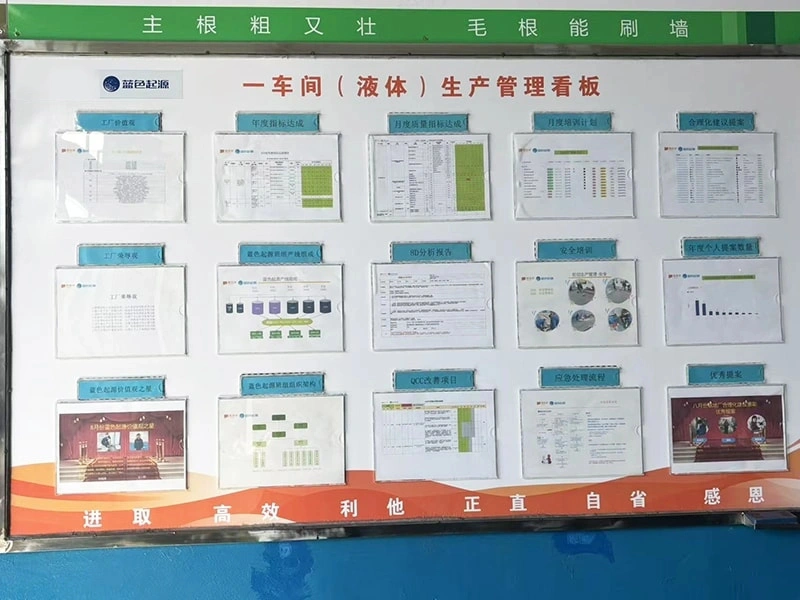
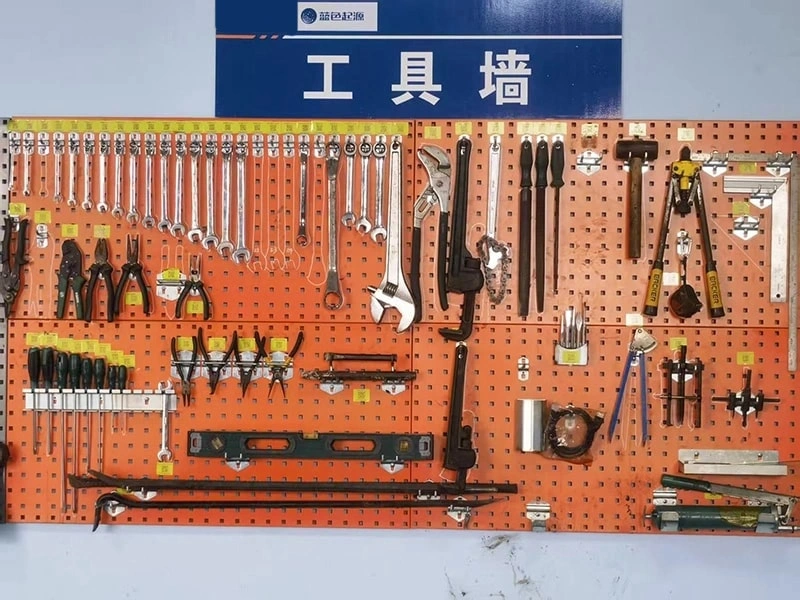
On-site management (5S positioning)